
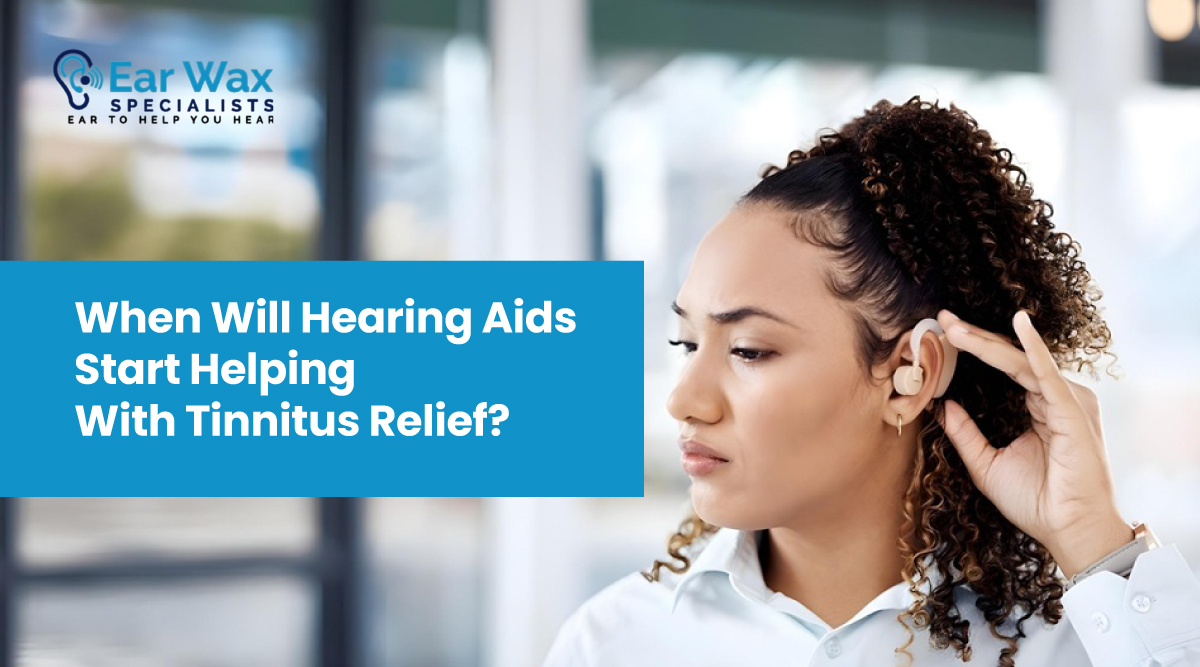
Written by the audiology team at earwaxspecialist.co.uk, your independent, trusted tinnitus experts in Birmingham. In this guide, we explain when hearing aids for tinnitus can help and what to expect.
Tinnitus refers to the perception of sound, such as ringing, buzzing or hissing, when no external source is present. It affects millions of patients in the UK. It can also be disruptive, often affecting sleep and concentration. In addition, it can have a significant impact on a person’s emotional well-being.
If you have hearing loss, hearing aids are one of the most common tools for managing tinnitus. So how exactly can hearing aids help with your tinnitus?
Below, we explore how wearing hearing aids can reduce tinnitus symptoms. We also look at typical timescales. Finally, we explain how your audiologist can support you with tinnitus relief.
The Link Between Tinnitus and Hearing Loss
Tinnitus is not a medical condition in its own right. Instead, it is often a symptom of an underlying problem, namely hearing loss. In fact, a common statistic indicates that 80% of people with tinnitus experience some degree of hearing loss.
Inside the ear, tiny hair cells help send sound to the brainstem as electrical signals. Damage to these hair cells can trigger tinnitus. This is because hearing loss reduces the sound input reaching the brain. As a result, the brain tries to fill in the gaps and creates a phantom sound. The patient then perceives this sound as a form of ringing inside their ears. Tinnitus can also vary greatly in its intensity or frequency.
How Can Hearing Aids Help With Tinnitus?
Hearing aids for tinnitus can help in several ways.
1. Sound Therapy Features
Over the last five years, many hearing aids from the leading manufacturers have come with built-in tinnitus management programmes. These programmes provide white noise generators, which mimic the sound of a patient’s tinnitus. As a result, they help reduce how much the patient notices their tinnitus.
2. Masking Impact
Masking is a very common effect of wearing hearing aids. Because of hearing loss, a patient cannot normally hear many natural sounds. However, hearing aids amplify these sounds in line with the patient’s prescription. Consequently, this sound can mask the buzzing or ringing that patients perceive in very quiet places.
3. Amplifying Ambient Sound
When hearing aids improve your hearing, the overall difference between amplified external sounds and the internal noise of tinnitus shrinks. As a result, your tinnitus becomes less noticeable. Thus, hearing aids can relieve the impact or intensity of your symptoms.
How Long Do Hearing Aids Take to Help Tinnitus?
It can take a while for your brain to habituate to the sound of tinnitus. In addition, several factors besides hearing loss can affect how you perceive it. However, our extensive fitting experience is encouraging. Most of our patients who wear hearing aids notice less tinnitus within weeks or months of their fitting.
Are There Any Alternatives?
Taking a holistic approach to tinnitus relief is very important. For example, stress, high venous blood pressure and poor sleep can all play a part in how you perceive tinnitus. So, along with hearing aid fittings, your audiologist should also offer tinnitus consultations. These explore any other factors that may be affecting your tinnitus. Options include:
- Cognitive behavioural therapy
- Tinnitus retraining therapy
- Sound therapy to help with relaxation
Lenire is a newer form of tinnitus treatment. It combines electrical impulses and sound stimulation to reduce the overall perception of tinnitus. Specifically, it sends electrical impulses to the tongue while playing sounds through headphones. Together, these two stimuli help retrain the brain’s neuroplasticity. As a result, the brain pays less attention to the phantom tinnitus sound.
Choosing the Right Hearing Aids for Tinnitus
Every manufacturer of the best hearing aids has a slightly different philosophy on how amplification should sound. Therefore, sound quality differs from one brand to another. Some manufacturers aim for a natural sound that mimics human hearing. Others, however, focus more on clarity, which often gives a sharper or tinnier sound. The built-in tinnitus programmes also vary between manufacturers. In our experience, some brands put greater emphasis on them, while others fall short.
At earwaxspecialist.co.uk, we do not rely on any one manufacturer. Instead, we provide hearing aids from the world’s leading brands. This means we can offer rechargeable, Bluetooth-connected and invisible hearing aids. It also lets us demonstrate a wide range of products, including custom devices designed specifically to tackle tinnitus. In addition, we help you understand the factors that influence hearing aid price, so you can buy with confidence.
Why Choose an Independent Provider Like Earwaxspecialist.co.uk?
For many years, we have served patients across Birmingham, Sutton Coldfield, Solihull, Coventry and Stourbridge. We have over 1,000 five-star Google reviews, which reflect our reputation as a leading independent hearing aid provider. Our services include:
- Expert tinnitus management
- Quick access to our services from your first call
- Tailored treatment plans for tinnitus and hearing loss
- Expert earwax removal using endoscopic microsuction
Final Thoughts on Hearing Aids for Tinnitus
We understand how debilitating tinnitus can be. We also know that hearing aids are not a complete cure for your symptoms. However, most of our patients do notice fewer tinnitus symptoms after their hearing aid fitting.
If you are struggling with tinnitus, we can discuss your options for reducing your symptoms. Simply get in touch, or book your free hearing test consultation at earwaxspecialist.co.uk.
Don’t suffer in silence; we are “ear to help”.