
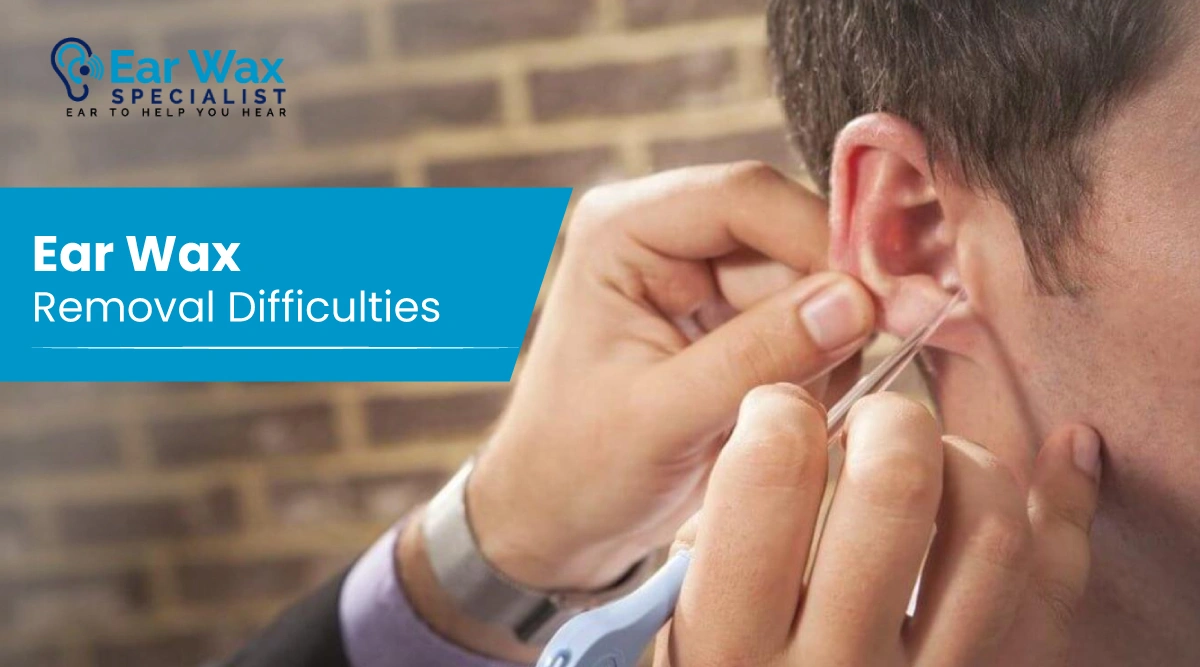
The NICE guidelines highlight microsuction as a clinically safe method for ear wax removal. In fact, it has now largely replaced the old method of ear irrigation, which uses water. However, microsuction has its challenges, and some patients face real ear wax removal difficulties.
What Causes Ear Wax Removal Difficulties?
The main challenges depend on the nature of each case. In particular, they depend on how impacted the wax is and how close it sits to the eardrum. In clinic, we see a wide variety of patients. Some have routine cases, where the wax sits in the outer two-thirds of the ear canal. However, a considerable number have non-routine cases, where the wax has ended up on the eardrum itself. These cases need a high degree of skill, training and experience to remove the wax safely and efficiently.
Most patients do not realise that most training only covers the outer two-thirds of the canal. As a result, patients often come to us after high street providers could not remove the wax from their eardrum. So, they still have the acute symptoms of deeply impacted wax. In our view, safe and effective wax removal from the eardrum needs endoscopic camera technology. It also needs a skilled and very experienced audiologist.
Why Can’t Every Professional Remove Ear Wax on the Eardrum?
From our experience, the reasons usually involve a combination of factors.
1. The Right Equipment
The type of equipment is one of the most significant factors. The ear canal is usually 24–27mm long. So, the depth of field and a clear view of the last third of the canal are critical. Most practitioners use dental loupes with 2–3x magnification. These are enough to remove wax in the outer third of the canal. However, they are certainly not enough for the bony canal or the eardrum at the far end.
The walls and the bony isthmus at the back of the ear canal are also very sensitive. They contain a rich network of touch, temperature and pain receptors. If you touch or disturb them, it can cause pain and discomfort. In contrast, endoscopic or microscopic viewing gives the depth and field of view to remove deeply impacted wax. At the same time, it avoids disturbing the delicate sensory fibres along the ear canal.
2. Training and Experience
The second reason is usually experience. Like the aesthetics industry, the ear wax removal industry is highly unregulated. In truth, most healthcare professionals can gain a certificate of competence after a one-day course. These courses are widely available to anyone interested in ear wax removal. Many attendees have no experience of any procedure on the human ear. For example, some courses now train pharmacists, footcare professionals and care support workers, among others.
This in itself is not a problem, and it is not sour grapes from us as a business. However, as trainers ourselves, we have a genuine concern. How competent can someone be after a 6-hour course? After all, they may only have practised on a dummy ear, using peanut butter as mock wax. As a result, skill levels vary widely between practitioners. So, you could even be the first real patient that someone is “practising” on.
How We Handle Ear Wax Removal Difficulties
At Ear Wax Specialist, every audiologist you see will have completed at least 1,000 ears. Alternatively, they will have 5 years’ experience of the procedure. Only then do we allow them to treat our patients. We set these strict criteria because of the number of difficult, non-routine cases now coming into our clinics.
As a group, we estimate that 60% of patients arrive with wax on or very close to the eardrum. Usually, this is because they have used a cotton bud. Alternatively, they may have overused drops in a desperate attempt to clear the wax, following medical advice. These are the cases that cause the greatest ear wax removal difficulties.
Complex Cases and Ear Wax Removal Difficulties
Furthermore, long NHS waiting times are bringing more patients with complex conditions to our clinics. For example, we now see more patients with a history of cholesteatoma or chronic otitis externa. Others have had a mastoidectomy, or have vestibular disorders or perforations. This is more reason to choose carefully who you see, and to know what to expect from a medical procedure.
Ear wax removal is also fast becoming an optional aesthetic extra. Influencers, and even some professionals, promote its cosmetic benefits heavily on social media. However, it remains a medical procedure. You should only have it as a last resort, when other options have failed.
Minimising the Risks of Ear Wax Removal
Every medical procedure carries risks. With ear wax removal, the key is to minimise the risk of tinnitus, vertigo, perforations and cross-infection. Although these are rare, they are still possible. Generally, the more skilled the practitioner, the quicker and more painless the procedure. Indeed, our patients sometimes comment on how quick it is. We have also found that it is important to spend no longer than ten minutes inside a patient’s ear canal. This is because the risks above increase the longer the procedure lasts.
Choosing the Right Professional for Ear Wax Removal Difficulties
We hope this article helps patients make the right choice. Above all, only see qualified audiological professionals, rather than simply picking the first result for “ear wax removal near me”. If you have deeply impacted wax, our microsuction service can help. You can also book an appointment online.